Media & News Trends for Irish Audiences
Explore media and news trends for Irish audiences presented by Alice PR at a Worldview Personas Workshop, and see how the Personas fit into the trends

Worldview Personas: Global Citizen ‘Fionn’
Personas are a key communication tool for targeting Irish audiences. By creating a fictional person grounded in real, robust Worldview data, Personas allow us to take a more user-centred approach to planning and communications. They help us think more clearly about who we’re speaking to, prioritise the right content within our strategies, and create a shared framework for understanding the public across our organisations. Explore the Global Citizen Persona, ‘Fionn’, below.

Worldview Personas: Community Champion, Aoife
Personas are a key communication tool for targeting Irish audiences. By creating a fictional person grounded in real, robust Worldview data, Personas allow us to take a more user-centred approach to planning and communications. They help us think more clearly about who we’re speaking to, prioritise the right content within our strategies, and create a shared framework for understanding the public across our organisations. Explore the Community Champion Persona, ‘Aoife’, below.

Worldview Personas: Multilateralist, Luke
Personas are a key communication tool for targeting Irish audiences. By creating a fictional person grounded in real, robust Worldview data, Personas allow us to take a more user-centred approach to planning and communications. They help us think more clearly about who we’re speaking to, prioritise the right content within our strategies, and create a shared framework for understanding the public across our organisations. Explore the Multilateralist Persona, ‘Luke’, below.

Worldview Personas: Pragmatist, Michael
Personas are a key communication tool for targeting Irish audiences. By creating a fictional person grounded in real, robust Worldview data, Personas allow us to take a more user-centred approach to planning and communications. They help us think more clearly about who we’re speaking to, prioritise the right content within our strategies, and create a shared framework for understanding the public across our organisations. Explore the Pragmatist Persona, ‘Michael’, below.

Worldview Personas: Empathisers, Michelle
Personas are a key communication tool for targeting Irish audiences. By creating a fictional person grounded in real, robust Worldview data, Personas allow us to take a more user-centred approach to planning and communications. They help us think more clearly about who we’re speaking to, prioritise the right content within our strategies, and create a shared framework for understanding the public across our organisations. Explore the Empathiser Persona, ‘Michelle’, below.

Worldview Personas: Disengaged, Pat
Personas are a key communication tool for targeting Irish audiences. By creating a fictional person grounded in real, robust Worldview data, Personas allow us to take a more user-centred approach to planning and communications. They help us think more clearly about who we’re speaking to, prioritise the right content within our strategies, and create a shared framework for understanding the public across our organisations. Explore the Disengaged Persona, ‘Pat’, below.
Worldview 2020-2026 Trends Insights
Explore the findings from new analysis of Worldview 2020-2026 Trends identified by Development Engagement Labs. Learn what drives Irish support for international development and willingness to donate to INGOs.
Worldview 2025 Video
Check out the Worldview 2025 video, distilling the statistics and insights into a simple but effective video format.
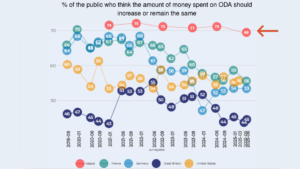
Worldview 2025 Comparative Statistics
Explore how in 2025 Irish attitudes towards development and aid compare to those in the UK, US, France, Germany, and Sweden.
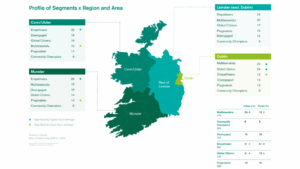
Worldview Wave 6 Audience Segmentation Manual
This Audience Segmentation Manual was developed to demonstrate the purpose and value of the Worldview segmentation. Explore the ‘Engagement Ladder’, learn more about segment views, and crucially, how to target each of them.
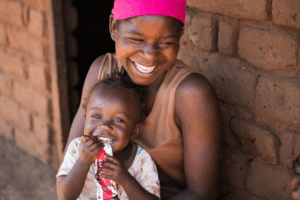
Choosing Images: 6 Factors that Influence how Irish Citizens Engage with Development Visuals
This was a guest blog on the OECD Development Communicators wesite, the SDG Communicator, exploring how the Irish public perceive images used by INGOs in their campaigns, and considering what this means for engagement.