

Safeguarding Resource And Support Hub
The Safeguarding Resource and Support Hub (RSH) aims to support organisations in the aid sector to strengthen their safeguarding policy and practice against Sexual Exploitation, Abuse and Sexual Harassment (SEAH).
By offering a wide range of free tools, training and advice in over 10 languages, RSH enables people and organisations to reduce the risk of harm.
RSH launched this Online Hub – a one-stop shop for relevant and accessible safeguarding materials – on June 1st 2020. The Hub signposts users towards quality assured safeguarding service providers and creates opportunities for meaningful engagement through discussion forums and live events. Any organisation working in the aid sector can access the Online Hub to learn, share and improve their approaches to SEAH and safeguarding more broadly.
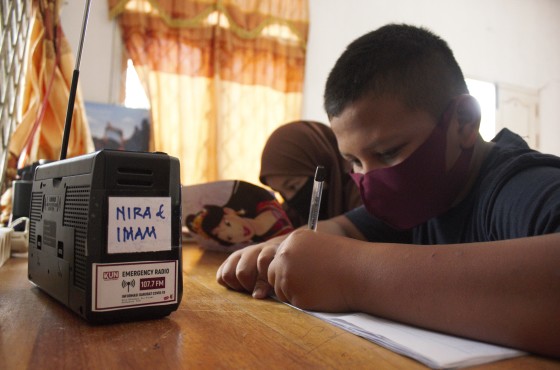
Ending Sexual Exploitation, Abuse, and Harassment in Development Co-operation and Humanitarian Assistance
Key Pillars of Prevention and Response
DAC Recommendation
The Development Assistance Committee (DAC) Recommendation on Ending Sexual Exploitation, Abuse, and Harassment in Development Co-operation and Humanitarian Assistance: Key Pillars on Prevention and Response was adopted on 12 July 2019. The DAC Recommendation is the first international instrument on sexual exploitation and abuse (SEA) and sexual harassment (SH) that applies to development co-operation and humanitarian assistance. It was developed in response to disturbing reports of sexual exploitation and abuse in development cooperation and humanitarian assistance and provides a comprehensive framework to support, guide, incentivise and help governments – in their capacity as donors, cross-government and international community stakeholders – to implement more coherent and aligned measures, following international standards, to prevent and respond to SEA and SH in their activities in the disbursement and/or management of aid, including by putting survivors and victims first, supporting organisational cultural change, building capacity, strengthening accountability, and bolstering the integrity of the international aid sector.

GOAL Safeguarding Case Study
GOAL presented a Safeguarding Case Study to the Dóchas Working Group in 2021
Mandy Yamanis – Global Safeguarding Advisor for GOAL – presented a Case Study of their work to the Dóchas Safeguarding Working Group.
The presentation gave an overview of
- Senior Management Commitment and Buy-In
- Integrating Safeguarding throughout GOAL
- Working with Partners
- Community Awareness Raising
- Other Key Safeguarding Actions

Bond: Developing And Modelling A Postive Safeguarding Culture: A Tool For Leaders
In 2021, Bond created a discussion-based tool to support leaders of organisations to understand what a positive safeguarding culture looks like.
Bond, the UK network for organisations working in international development, created a discussion-based tool to support leaders of organisations assess their organisational culture in relation to safeguarding and develop clear actions to help prevent all types of harm, including sexual exploitation, abuse and sexual harassment.
The tool has six sections:
- accountability;
- policies and processes;
- do no harm/safer programming;
- survivor-centred approach; awareness-raising;
- and safer recruitment and HR processes.
This tool is not a safeguarding training tool. It is designed to facilitate honest discussion and generate conversations to support teams or organisations to make important culture changes within their working environments.

Inter-Agency Misconduct Disclosure Scheme: Steering Committee For Humanitarian Response
The following gives and overview and links to the presentation regarding an Information session by the Steering Committee for Humanitarian Response on the Inter-Agency Misconduct Disclosure Scheme
Inter-Agency Misconduct Disclosure Scheme: Steering Committee for Humanitarian Response
The Steering Committee for Humanitarian Response gave an Information Session on the Inter-Agency Misconduct Disclosure Scheme. The following presentation gives an overview of:
- the background behind the Scheme
- what the Scheme does, and doesn’t do, and it’s rationale
- links to other initiatives
- the Scheme in practice, including implementation guidance, legal requirements and supports available
Protection From Sexual Exploitation And Abuse And Sexual Harrasment Implementation Handbook
This Handbook developed by the CHS Alliance provides a complete quick reference guide to implementing measures for protection from sexual exploitation and abuse and sexual harassment in an organisation or project
This Handbook, published in 2020 by the CHS Alliance, provides a complete quick reference guide to implementing measures for protection from sexual exploitation and abuse and sexual harassment (PSEAH) in an organisation or project. Each chapter includes a case study sharing how specific organisations tackled this important work.
These guidelines can be used by organisations which are just beginning to put PSEAH measures in place. It can also be used by more experienced organisations to check that their PSEAH work fully reflects current good practice.
They have also compiled some additonal resources relevant to the PSEAH Handbook which can be accessed via their website here.
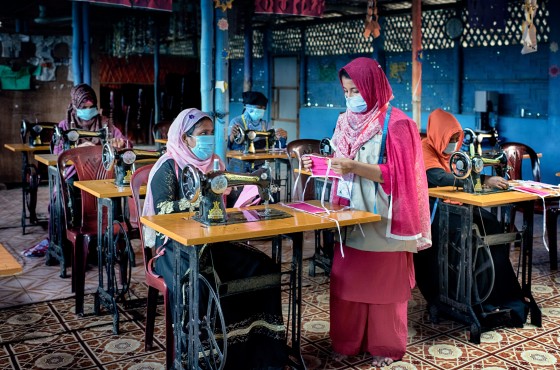
The Charities Regulator Safeguarding Guidance For Charitable Organisations
The Charities Regulator has produced separate guidance for charities whose activities include working with:
- Children
- Vulnerable persons (adults): Reference to vulnerable adults includes the elderly, those who are sick, and those who are disabled
The purpose of these guidance notes are to provide a broad overview of safeguarding principles, key legislative requirements and relevant national guidance, policies and procedures relating to the protection and welfare of children and vulnerable persons (adults). This guidance also identifies resources available from other agencies to ensure that safeguards are in place that adequately protect children and vulnerable persons (adults).
This will assist organisations wishing to apply for registration in the Register of Charities and registered charities seeking to meet the standards set out in the Governance Code.
Caritas Safeguarding Training Resource
Caritas introduces five short films and a discussion guide as a training resource to strengthen safeguarding in humanitarian contexts.
Caritas Safeguarding Training Resource
Trócaire (Caritas Ireland), together with CAFOD (Caritas England & Wales), Caritas Austria, Caritas Czech Republic, Caritas Romania and Caritas Europa secretariat, developed the training short films in 2019.