EU News
Stay up to date with the most recent news on EU humanitarian aid, development and human rights during the Irish Presidency
EU Presidency Events Calendar
EU Resources Hub
Explore a curated selection of materials to support your understanding and engagement with the EU and the Irish Presidency
What is the EU? And why does it matter to our sector?
Created in the aftermath of World War II, the European Union was built with the aim of preventing future conflict between European countries through economic integration and political cooperation
EU Institutions and Decision-Making
The European Union’s institutional set-up is unique and its decision-making system is constantly evolving. The 7 European institutions, 9 EU bodies and over 30 decentralised agencies are spread across the EU. They work together to address the common interests of the EU and European people.
These institutions have specific roles – from developing EU laws and policy-making to implementing policies and working on specialist areas, such as health, medicine, transport and the environment.
However, in this section, we will be focusing on the 4 main EU decision-making institutions. These lead the EU’s administration and collectively provide the EU with policy direction, playing different roles in the law-making process:
- European Parliament (Brussels, Strasbourg and Luxembourg)
- European Council (Brussels)
- Council of the European Union (Brussels and Luxembourg), which Ireland is presiding over from 1 July to 31 December 2026
- European Commission (Brussels, Luxembourg and Representations across EU Member States.
Let us now explore each one of them:
European Parliament
- Quick facts + powers
- Political groups seat distribution (2024-2029)
- Ireland representation in the EP
European Commission
Council of the EU
Explainer Video:
Quick Facts
- From 1 July to 31 December 2026, Ireland holds the Presidency of the Council of the European Union (commonly known as EU Presidency). This is Ireland’s 8th Presidency – after 2013, 2004, 1996, 1990, 1984, 1979 and 1975.
- Its three main priorities are competitiveness, values and security, under the motto “Ní neart go cur le chéile” (“Strength with unity”).
- Ireland’s main role during this 6-month period is to chair Council negotiations across all sectors of EU policy and work to ensure cooperation, continuity and progress among the 27 EU Member States. During this time, Ireland will act as an “honest broker”, having to remain neutral in its positioning.
- To ensure continuity over the next 18 months, Ireland’s Presidency is incorporated in the Trio Presidency involving Lithuania (Jan – Jun 2027) and Greece (Jul – Dec 2027). As the first Presidency in the Trio, Ireland is leading on its implementation.
What will Ireland do during its 6-month term?
- Plan and chair Council meetings and negotiations.
- Lead around 180 Council preparatory bodies.
- Represent the Council in discussions with the European Parliament and the European Commission.
- Lead “trilogue” negotiations on EU legislation.
- Ensure transparent communication of decisions.
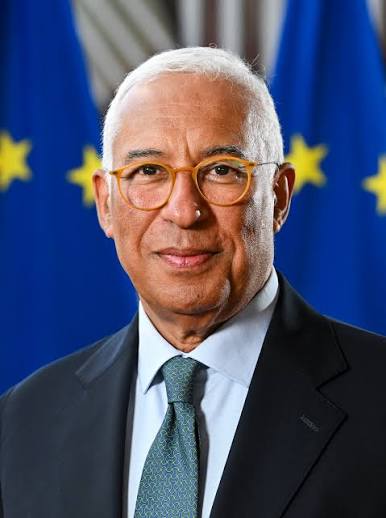
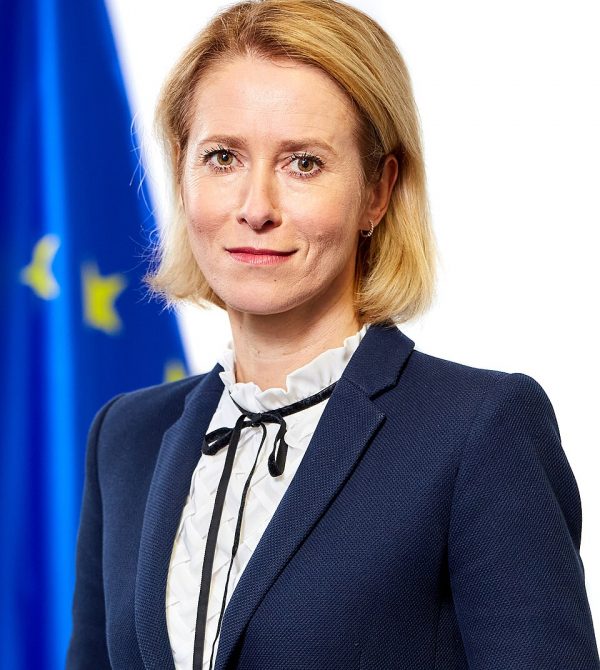
- Work closely with the President of the European Council (António Costa) and the EU High Representative for Foreign Affairs and Security Policy (Kaja Kallas).
Why does the Irish EU Presidency Matter for the Irish Development and Humanitarian Sector?
- Despite its “honest broker” position, Ireland has pledged to keep the EU’s role as the world’s largest development and humanitarian actor front and centre.
- On 15 July 2026, standing before the European Parliament’s Committee on Development (DEVE), Minister Neale Richmond presented Ireland’s Presidency priorities. Minister Richmond framed development not as charity but as “an investment to target issues at source”:
- Reducing poverty, inequality and instability must be at the heart of Ireland’s priorities;
- Ukraine, Gaza, Sudan, the Horn of Africa, Sahel, Eastern DRC, the Great Lakes, and the wider Middle East are the main focus regions of Ireland’s Presidency;
- Emphasis on climate-smart responses, early warning systems, food and nutrition security, and global health resilience.
- As the EU and its Member States provide close to 40% of global humanitarian funding, Richmond stressed the need to defend both the volume and quality of EU aid, alongside long-term resilience-building – not just short-term relief.
- On 15 July 2026, standing before the European Parliament’s Committee on Development (DEVE), Minister Neale Richmond presented Ireland’s Presidency priorities. Minister Richmond framed development not as charity but as “an investment to target issues at source”:
- Among the many negotiations Ireland will chair during its Presidency, cross-cutting themes affecting and pertaining to development cooperation, humanitarian action and human rights will come up in several different Council formations.
- The negotiations on the EU’s long-term budget – known as the Multiannual Financial Framework (MFF) – was named the Presidency’s overarching priority. The next MFF (2028-2034) will shape the future of the EU humanitarian and development architecture, alongside progress on the new Global Europe Instrument (GEI).
- It is within the MFF where negotiations about the budget dedicated to the EU’s Official Development Aid (ODA), the new Global Europe Instrument (GEI) and the Global Gateway strategy. These are extremely important for the sector.
MFF explainer video
Full list of Resources
Free Online Courses
- EU Policy and Implementation: Making Europe Work! (Coursera)
- DG ECHO Humanitarian Aid Learning (EU Academy)
European Union Factsheets (by the European Parliament)
1. How the European Union works
2. The EU’s External Relations