

Irish support for development co-operation has remained high and relatively stable over the last five years. 3 in 4 citizens believe that ODA makes a positive impact in recipient developing countries. However, global trends show that funding for NGOs cannot be taken for granted. Many organisations are looking to their supporter base and public for increased engagement and financial donations.
Different images trigger different emotions
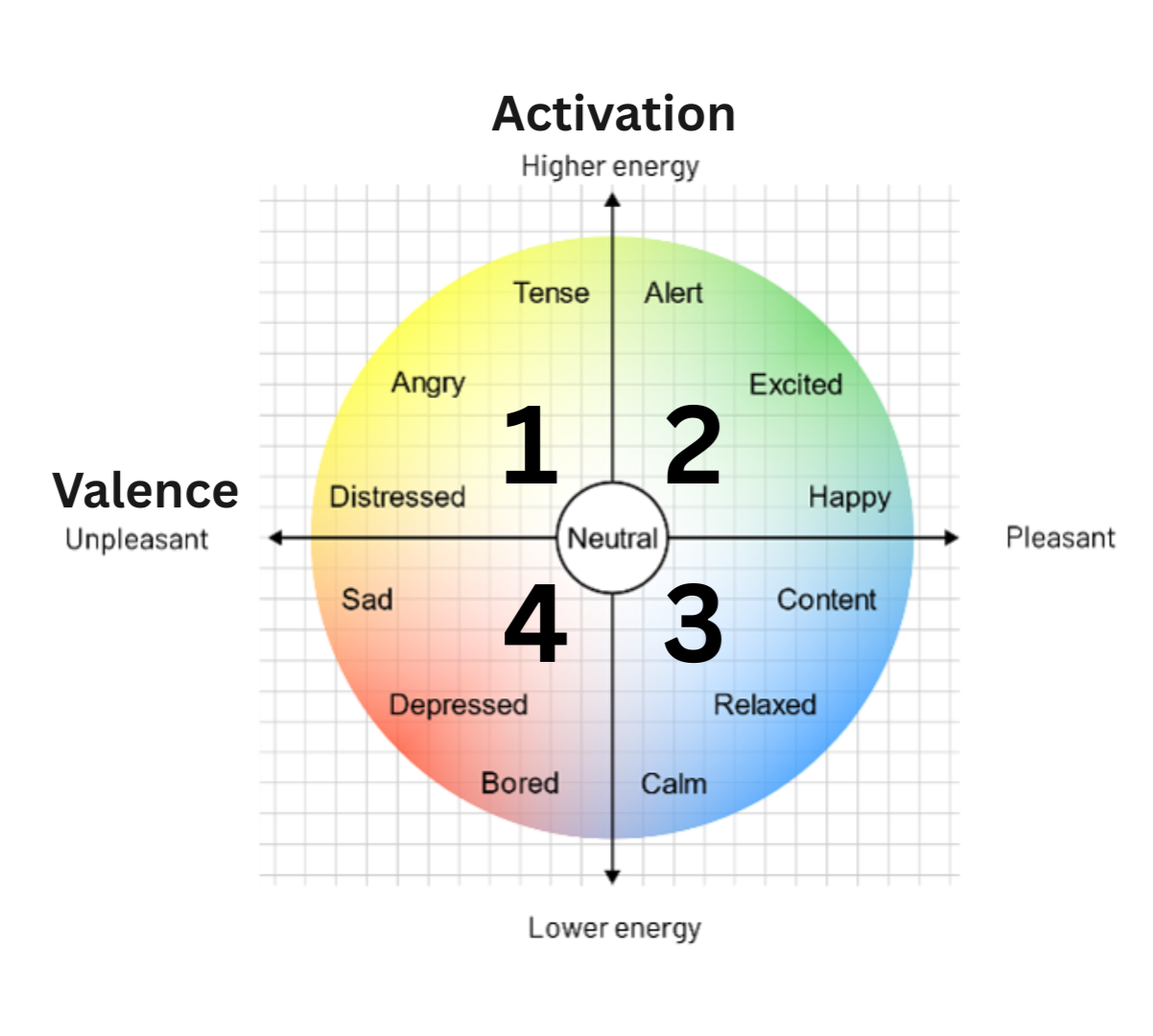
As part of Wave 5 of our Worldview research, we looked at how citizens respond to images that Irish NGOs use in their campaigns and appeals.
In particular, we explored:
- Which images motivate respondents to engage in an appeal?
- What emotions do images trigger, and how do these matter for engagement?
To chart respondents’ emotions when shown an image, we used the ‘Emotional Circumplex’ (see Figure 1). The Model charts emotions into four quadrants based on whether they are positive or negative (i.e. their level of “valence)”, and their level of related energy (i.e. “activation”).
We found that, overall, images that elicit the emotions in quadrants 1, 2, and 3 tend to get better engagement. Quadrant 4, low energy and low valence, tends not to garner engagement. Our research found that, overall, when shown an image, people are more likely to want to engage in an appeal.
Six factors to bear in mind when choosing an image
We found six factors that influence people’s emotional reactions to and engagement with an image. We can think of these factors like a checklist – the more we tick off, the more likely we will have positive engagement. So: how many of the following factors does your image satisfy?
Factor 1: Photographic Quality
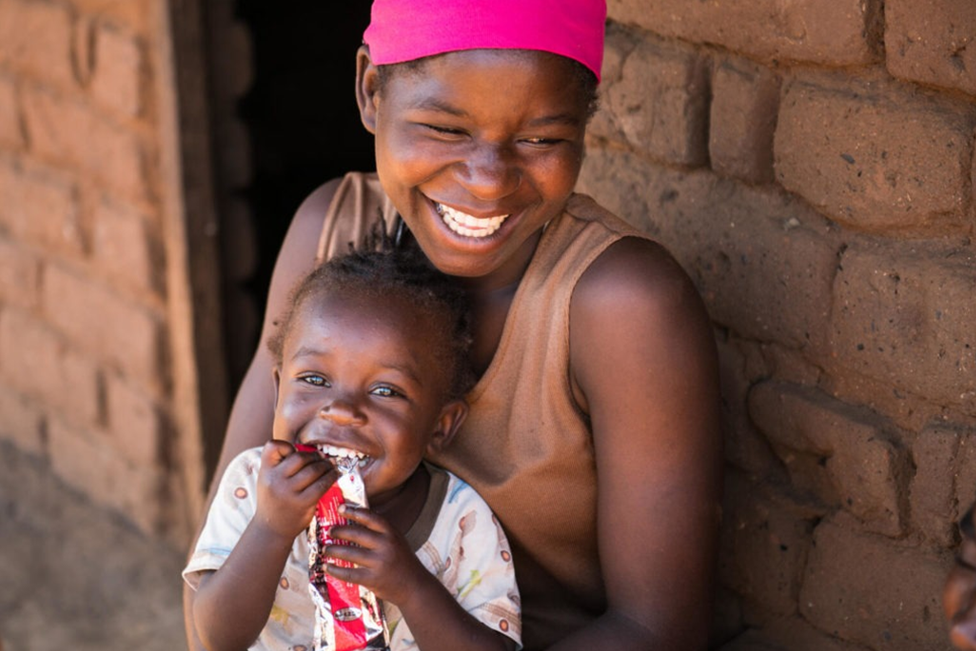
The simple quality of a photo has an influence on reactions. Is the protagonist easily discerned from the background detail? Is there a dramatic use of colour? Are we drawn into the scene by a protagonist’s eye contact or smile? Images with more emotional impact are often simply better-quality photos.
The image opposite is a prime example of one with photographic fidelity. Note the image definition, the rich colours, and the bright smiles that draw us in. It’s simply a well-shot photo.
Factor 2: Main Character Meaning
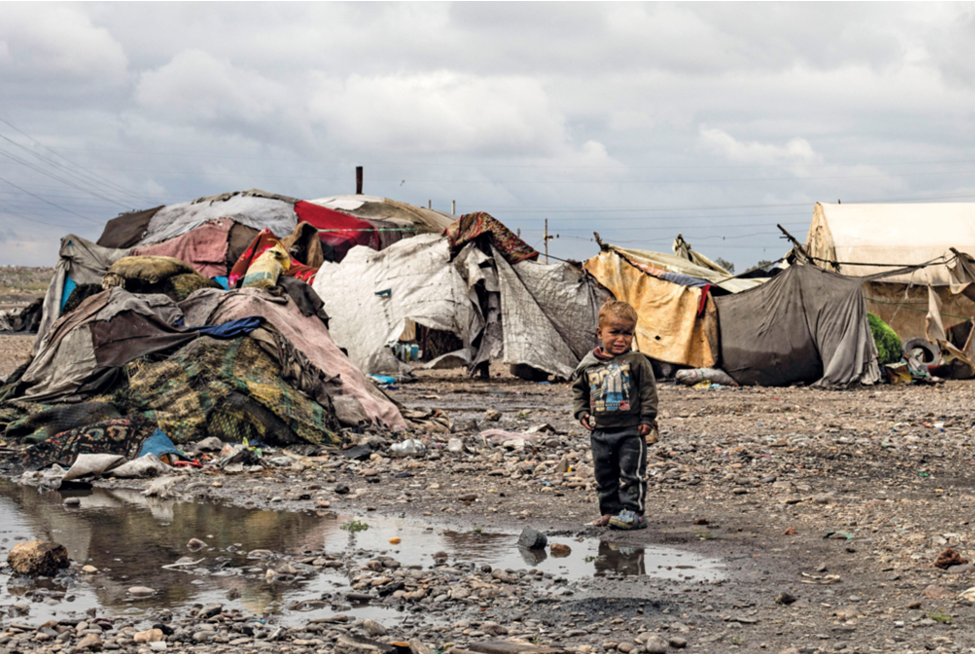
Successful images draw our attention to an individual protagonist, their situation, their relationship with other people or with their environment. Are our protagonists vulnerable, in jeopardy, or in an emotional state? All three are encompassed in the photo below. Immediately the viewer is drawn to the young child at the centre, provoking a sense of urgency due to their fragility within the environment. This urgency is a high-energy negative emotion which increases engagement.
The image opposite is a prime example of one with photographic fidelity. Note the image definition, the rich colours, and the bright smiles that draw us in. It’s simply a well-shot photo.
Factor 3: Immediate Impact
Each day, our brains see, screen, and interpret a huge volume of images, more so than any other time in history. As a result of this exposure to both physical and digital imagery, we have become adept at quickly, almost unconsciously, screening out certain images.
Unsurprisingly, images with a sense of drama or novelty work best in appeals. We can ask ourselves: will this image stand out from other images? Does this image portray something new?
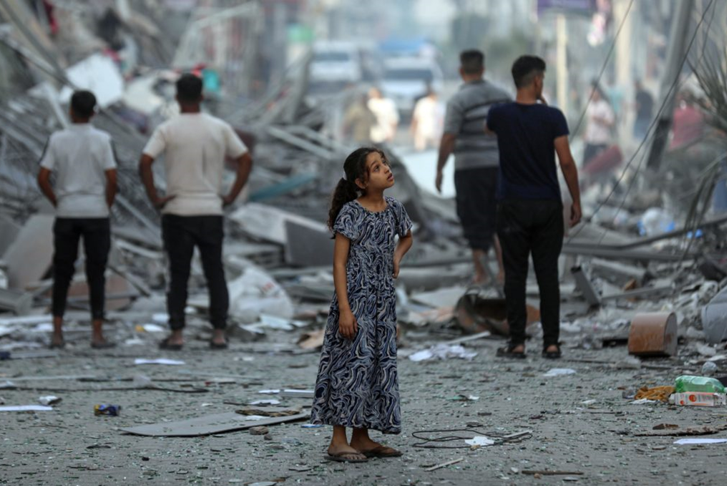
The picture below exemplifies impact. We are immediately drawn into the young protagonist, whose pensive expression is juxtaposed with the chaotic scene behind her. The image portrays stillness in the aftermath of chaos, and perfectly illustrates how all six factors come together in a single, powerful image.
Factor 4: Viewer Relatability
Viewers are often looking for images they can relate to in terms of similar experiences in their own life. This relatability can operate at an almost subconscious (“gut”) level or can emerge more slowly from consideration and comparison.
Another aspect of connection comes from the sense that the viewer has a role to play. Does the protagonist need something? Can I do anything to help? This can create a ‘call-to-action’ effect.
The image below of a woman receiving a vaccine immediately connected with research respondents, with many referring to their own similar reactions when receiving COVID-19 vaccines, and some finding it comical in a relatable way.

Factor 5: Storytelling Power
Some images ‘unfold’ with more of a sense of a background story than others. An easily understandable story tends to have more effect.
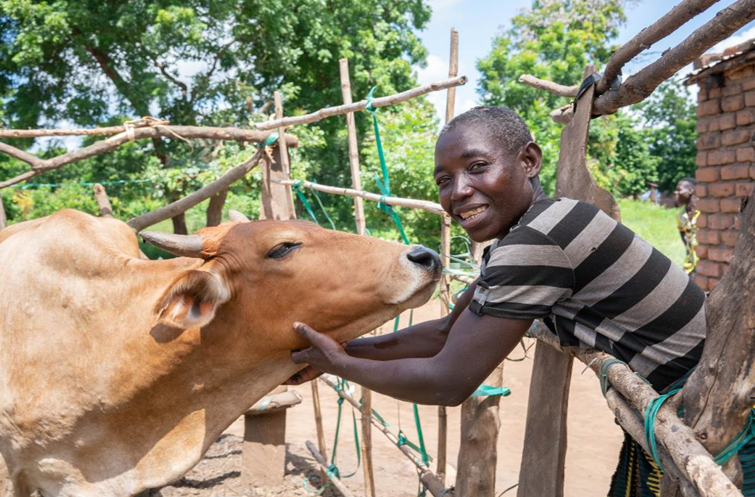
In our focus groups, many respondents felt that the image below portrayed a farmer grateful for his livestock, unpacking the elements of the photo such as the seemingly relaxed cow, the enclosure for the animal, and the farmer’s wide smile. Respondents from more rural, agricultural areas understood this relationship and the appreciation between an individual and an animal, both supporting one another. This also indicates that images and their stories can have a deeper symbolic meaning that can be more relatable and thus engaging, such as the experience of motherhood, relationships between siblings, familial care, or even between a farmer and their livestock.
Factor 6: Authenticity of Scenario
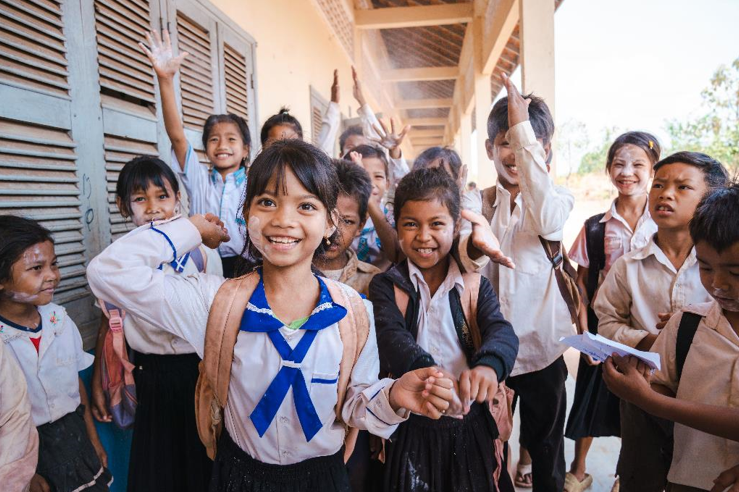
Viewers tend to initially trust the authenticity of an image. Over time, however, they can pick out elements that make the image look staged. People today are ‘trained’ to recognise images that are photoshopped, A.I.-generated, filtered or edited. An image’s connection, or perceived connection, to an active or contemporary news story can also support a viewer’s sense of authenticity. This also helps create a sense of recency – the image is interpreted as ‘new’ and not seen as archival footage simply being attached to an appeal.
The scenario below with schoolchildren is perceived as authentic and energetic.
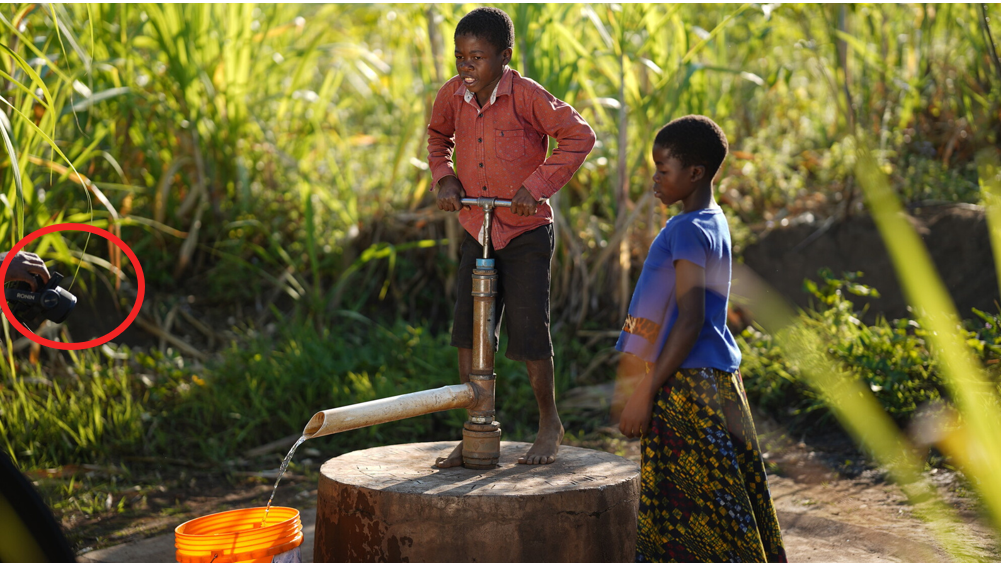
The research found that there can be rapid negative response when people feel there is a deliberate intention to manipulate their reaction and emotion, such as through a high emotive scene that has been engineered for effect. In this image of children pumping water, the camera to the left is almost imperceptible. But in each of the six research focus groups we ran, at least one person noticed it, and, when mentioned to the group, this had a rapid, negative effect on all respondents. The public is extremely sensitive to attempts to manipulate them.
“They’ll probably never know”: Politics and Ethics in Image Creation
Following these six factors, let me share a final note on the ethical considerations behind development images. Images are inherently political and how communities are represented (or misrepresented) has ethical ramifications. We can’t fall into the trap of using unethical, exploitative imagery to grab the public’s attention, donations or pity. There is a broad consensus that we need to evolve as a sector, aligning with new standards like co-creation rather than participation.
In a recent webinar, Andrew Kartende, a Ugandan-based photographer, reminded an audience of Irish NGOs of the need for dignity in content creation. This includes using sector sensitive language, not staging scenes and manipulating photos, and ensuring that images are distributed or replicated with consent.
The images used in the Worldview research were not screened before they were put to the Irish public, as this would risk biasing our results. Therefore, not all of the images here would meet some ethical standards, including the Dóchas Guide to Ethical Communications, which Irish NGOs use as guidelines.
Conclusion
Development organisations need new, more salient ways of connecting and drawing in public support. With more people tuning out of the news, images can draw our audiences back in. Indeed, our images may be more important than the words and narratives we craft.
We can no longer use lack of evidence, nor crisis, as excuse.